If you are deciding between new construction and an established neighborhood in McLean, you are really choosing between two different ways of living. Some buyers want a move-in-ready home with newer systems and easier access to transit or mixed-use amenities. Others want a larger lot, more privacy, and the mature feel that comes with long-established residential streets. This guide will help you compare both options so you can focus on the version of McLean that fits your priorities best. Let’s dive in.
McLean's Housing Pattern Matters
McLean is not a market where new construction usually means a huge new subdivision on open land. Fairfax County describes most of the area as stable, low-density residential neighborhoods with very little vacant land. That means newer homes in McLean often come through infill building, teardown and rebuild projects, or redevelopment in targeted areas.
That local pattern is important because it shapes what you will actually find on the market. In many cases, the choice is not simply a brand-new home versus an older home. It is often a choice between newer housing near redevelopment areas and established housing in low-density neighborhoods.
McLean is also a high-value, mostly owner-occupied market. Census data show a median owner-occupied home value of $1,412,700 and an owner-occupancy rate of 86.1%. For buyers, that means both new and established homes tend to sit within a competitive, long-term ownership market.
Where New Construction Shows Up
In McLean, new construction tends to cluster where redevelopment is already encouraged. Fairfax County has identified the McLean Community Business Center, centered around Chain Bridge Road and Old Dominion Drive, as a key area for reinvestment and redevelopment. New projects there often replace smaller existing buildings on compact parcels with denser mixed-use or multifamily development.
You may also see the strongest new-construction story on McLean's eastern side near Tysons. Fairfax County describes Tysons as a county downtown served by four Silver Line Metro stations and evolving into a walkable urban center. For buyers who want newer housing tied to rail access and nearby amenities, this part of the market can stand out.
That does not mean every new home in McLean is attached to a denser setting. Some are custom rebuilds on existing lots. Still, the broader trend is clear: newer inventory usually appears where redevelopment or infill makes sense, not where large undeveloped tracts remain.
What Established Neighborhoods Offer
Established neighborhoods are where McLean's traditional low-density character is most visible. Fairfax County notes that much of the district is intended to remain stable, and areas along the Potomac are generally limited to large-lot single-family uses. County zoning standards in some districts require minimum lot areas of 25,000 to 36,000 square feet in conventional subdivisions.
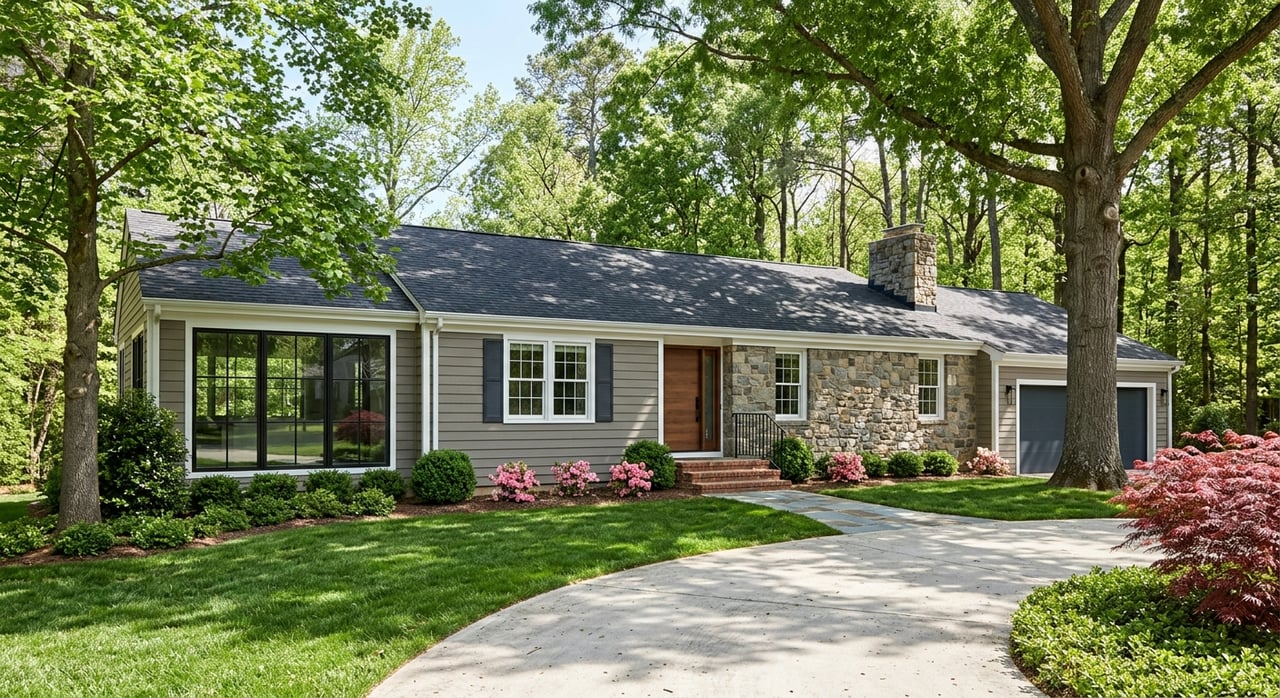
That helps explain why many established parts of McLean feel greener, quieter, and more private. If you picture broad lawns, mature trees, longer driveways, and more separation between homes, you are likely thinking of the established side of the market.
These neighborhoods also tend to include mixed-era detached homes rather than one uniform look. Because McLean developed over many decades, floor plans, exterior styles, and renovation levels can vary from street to street. For many buyers, that variety is part of the appeal.
New Construction Benefits to Consider
For some buyers, the biggest appeal of new construction is simplicity. A newer home is often easier to align with current living preferences, especially if you want open layouts, updated finishes, and less immediate repair work after closing.
Energy efficiency can also be a meaningful advantage. ENERGY STAR states that certified new homes exceed minimum energy-code requirements by at least 10%, and ENERGY STAR NextGen homes can be about 20% more efficient than homes built to typical code levels. That can matter if you are focused on operating costs and modern performance.
Another draw is the feeling of a more turnkey move. If you are relocating for work or want to shorten your to-do list after moving in, a recently built or newly delivered home can reduce the need for near-term upgrades. In a market like McLean, where many buyers balance housing decisions with demanding work schedules, that convenience can carry real weight.
Established Neighborhood Benefits to Consider
If lot size and privacy are high on your list, established neighborhoods usually have the edge. Fairfax County's planning and zoning framework helps explain why. Much of McLean's long-established residential fabric is built around lower-density development patterns that are hard to replicate in newer infill settings.
You may also prefer the landscape that comes with an older neighborhood. Mature trees, deeper setbacks, and a more settled streetscape can create a very different day-to-day feel than a newer redevelopment area. For buyers who want breathing room, this often becomes the deciding factor.
Established homes can also offer more architectural variety. Instead of seeing a builder-driven set of similar finishes and layouts, you may find homes that differ widely in scale, style, and renovation history. That can create more options if you care about individuality or want a property with room for future updates over time.
Commute, Walkability, and Convenience
One of the clearest differences between new construction and established neighborhoods in McLean is how close you are to transit and daily conveniences. Fairfax County's transportation resources specifically point to downtown McLean, Tysons, and the W&OD Trail corridor as places where walking and bicycling facilities are easiest to find.
That means buyers who prioritize walkability and shorter trips to mixed-use amenities often lean toward the CBC or the Tysons side of McLean. WMATA says the McLean Metro station sits directly off I-495 and near Route 123, Tysons Corner shopping, and major corporate headquarters. If your routine includes Metro access or regular trips to nearby offices and retail, location may matter just as much as the home itself.
By contrast, homes deeper in established residential areas are often more car-dependent for errands and rail access. The tradeoff is that these locations may offer the larger lots and quieter setting that many buyers are looking for. In McLean, convenience and space often sit on opposite sides of the same decision.
Maintenance and Inspection Differences
Newer homes often appeal to buyers who want fewer early maintenance concerns. That does not mean they are maintenance-free, but it may reduce the chance of facing older systems or worn components soon after move-in.
Established homes require a different lens. The Consumer Financial Protection Bureau advises buyers to budget for maintenance, repairs, and utilities, and its inspection guidance notes that worn or damaged items can be identified and negotiated before closing. In practical terms, that means a strong inspection strategy matters even more when you are buying an older home in McLean.
There is also a process difference with new construction. Fairfax County requires residential new-building permits and inspections, so the timeline can be more involved than a standard resale closing. If you are comparing options, it helps to weigh not only the condition of the home but also the path to closing.
Which Buyer Often Prefers Each Option
Your lifestyle can often point you toward the right fit faster than a feature list can. Buyers relocating to the area often place a premium on turnkey condition, efficiency, and commute convenience. In McLean, that can naturally draw attention toward newer homes near redevelopment and transit-connected areas.
Local move-up buyers may see the equation differently. If you already know the value of larger lots, mature landscaping, and established residential streets, the traditional neighborhoods may feel more aligned with your long-term goals. Fairfax County's planning framework supports that distinction, with clear separation between redevelopment nodes and stable low-density neighborhoods.
Neither path is automatically better. The best choice depends on whether you value urban-edge convenience or suburban space and privacy more.
A Simple McLean Comparison
| Factor | New Construction in McLean | Established Neighborhoods in McLean |
|---|---|---|
| Typical setting | Infill, teardown/rebuild, or redevelopment areas | Stable low-density residential areas |
| Lot size | Often smaller | Often larger |
| Privacy | Usually less than large-lot areas | Often stronger |
| Condition | Newer systems and finishes | Varies by age and updates |
| Efficiency | Often better, especially with certified homes | Depends on improvements over time |
| Walkability | Stronger near CBC, Tysons, and Metro | Often more car-dependent |
| Closing process | Can involve permits and inspection milestones | Usually a more standard resale timeline |
How to Decide in McLean
A smart decision starts with a clear ranking of your priorities. If your top goals are low maintenance, energy efficiency, and easier access to Metro or mixed-use amenities, newer construction may be the better fit. If your top goals are lot size, privacy, and a more established neighborhood setting, the resale side of McLean may offer more of what you want.
It also helps to think beyond the house itself. In McLean, land use and redevelopment patterns affect what a block feels like today and what it may look like over time. That is why local planning context matters when you compare one area to another.
The strongest buyers in this market usually make the best decisions when they compare location pattern, lot characteristics, condition, and daily routine together. When you look at those pieces as a whole, the right choice often becomes much clearer.
If you want help sorting through McLean's newer infill opportunities versus its established large-lot neighborhoods, Dianne Van Volkenburg can help you evaluate the tradeoffs with local perspective, careful strategy, and a high-touch approach.
FAQs
What does new construction usually mean in McLean?
- In McLean, new construction often means infill, teardown and rebuild, or redevelopment in places like the McLean CBC or near Tysons, rather than a large new subdivision.
Are established neighborhoods in McLean usually larger-lot areas?
- Yes. Fairfax County's planning and zoning framework helps explain why many established parts of McLean offer larger lots, more privacy, and a lower-density residential feel.
Is new construction in McLean usually closer to Metro?
- Often, yes. The strongest transit advantage tends to show up on McLean's eastern side near Tysons and the Silver Line, including the McLean Metro station area.
Do established homes in McLean require more maintenance?
- They can. Older homes may have more repair or update needs, which is why inspections, repair budgeting, and condition review are especially important.
Which is better in McLean: new construction or an established neighborhood?
- The better choice depends on your priorities. Newer homes often suit buyers who want efficiency, convenience, and turnkey condition, while established neighborhoods often suit buyers who want space, privacy, and a more mature residential setting.