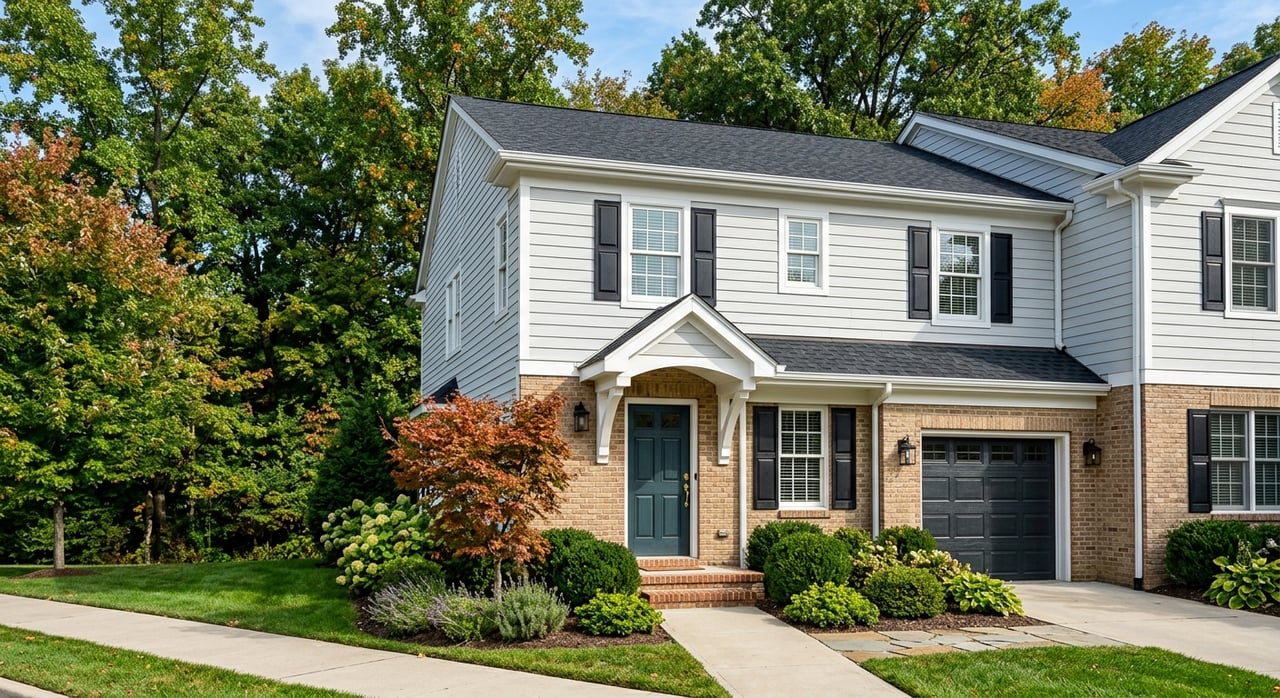
Choosing between a townhome and a single-family home in Reston is not just about square footage. It is about how you want to live day to day, how much maintenance you want to handle, and how comfortable you are with association rules. If you are trying to decide which option fits your lifestyle, this guide will help you compare the tradeoffs clearly and confidently. Let’s dive in.
Reston has a unique housing setup
Reston is not a typical suburban community. It was planned around village centers, greenbelts, pathways, and shared open space, which shapes how different home types feel and function.
Fairfax County identifies five village centers in Reston: Lake Anne, Tall Oaks, Hunters Woods, South Lakes, and North Point. Lake Anne is especially notable because the county describes it as the first village center and the clearest expression of Reston’s original pedestrian-scale concept.
That planning history matters when you compare townhomes and detached homes. In many parts of Reston, your experience of home includes not just your lot, but also the trails, recreation facilities, parking arrangements, and shared spaces around you.
Start with the biggest difference
For most buyers, the real decision comes down to this: Do you want more personal responsibility or more shared oversight? In Reston, that question often matters more than the label on the property type.
Townhomes and clustered homes often appeal to buyers who want less individual exterior responsibility. Single-family homes often appeal to buyers who want more control over their property, even if that means taking on more upkeep.
That pattern reflects Reston’s association structure. Reston Association maintains common-area trails, parking areas, recreation facilities, and open space, but it does not maintain residential property.
How association layers affect your choice
One of the most important things to understand in Reston is that there can be more than one layer of association. Reston Association says it has more than 160 sub-associations, which means rules and fees can vary from one property to the next.
Reston Association handles community-wide amenities and common spaces. Cluster associations, on the other hand, own and manage cluster common area, provide upkeep for it, and collect cluster assessments.
Single-family homes that are not located in a cluster do not use cluster standards. That can mean a simpler ownership structure, though you still need to review the specific property carefully.
What this usually means for townhomes
With a townhome or cluster property, you may have less direct responsibility for some exterior common elements and shared spaces. In return, you are usually buying into a stronger layer of shared rules, design oversight, and dues.
That setup can be attractive if you want a more lock-and-leave lifestyle. It can also be a good fit if you value access to Reston’s amenities more than having full autonomy over every exterior decision.
What this usually means for single-family homes
With a detached home, you often gain more independence in how you use and maintain your property. You may also have more private outdoor space, which can be a major advantage if that matters to you.
The tradeoff is that more freedom usually comes with more upkeep. If you prefer to manage your own yard, exterior maintenance, and long-term property improvements, a single-family home may feel like the better fit.
Design review matters for both
Some buyers assume that a detached home means no design review. In Reston, that is not the case.
Reston keeps a strong review process for both home types. Most exterior alterations or additions, including tree removal, require Design Review Board or Covenants review.
The notification rules also differ by property type. Cluster or condo properties notify the two closest affected neighbors plus a cluster officer, while single-family detached homes notify three affected neighbors.
Why this matters to you
If you are planning to make changes after you buy, you should ask questions early. Whether you are thinking about landscaping, exterior updates, or an addition, the review process is part of the ownership experience in Reston.
This does not automatically favor one home type over the other. It simply means that buyers should compare not just the house itself, but also the approval process that comes with it.
Outdoor space looks different in Reston
If outdoor living is high on your list, the townhome versus single-family decision often comes down to private yard space versus shared open space. Reston offers both, but they create different lifestyles.
Reston Association says the annual assessment helps fund pools, pathways, open space, and covenant enforcement. Its 2026 budget explainer lists the annual assessment at $890, and the 2026 welcome guide says recreation passes are included at no extra charge.
Reston Association materials also describe roughly 1,300 to 1,350 acres of open space, four lakes, 55 miles of pathways, and 15 pools. That means even if your individual lot is smaller, the broader community still offers substantial outdoor access.
Townhome outdoor lifestyle
A townhome can work well if you like the idea of stepping out to trails, pools, village centers, and shared green space without taking care of a large private yard. For many buyers, that balance is one of Reston’s biggest advantages.
This can be especially appealing if you want convenience and a more connected neighborhood feel. In a place like Reston, shared open space often becomes part of your daily routine.
Single-family outdoor lifestyle
A detached home may be the better match if you want more private outdoor room for entertaining, gardening, or simply enjoying separation from nearby homes. If personal outdoor space is a top priority, that extra room can carry real value.
You still benefit from Reston’s larger amenity system, but your home base may feel more private and self-contained. That is often the draw for buyers who want both community access and stronger property control.
Parking can be a deciding factor
Parking is another area where buyers should avoid assumptions. In Reston, road ownership and maintenance are layered, and that affects how some neighborhoods function.
Reston Association says VDOT handles most roads, some roads belong to residential clusters, Reston Association maintains pathways, and private streets in condo, cluster, or apartment complexes are handled by the cluster association or management company. Because of that structure, parking is highly site specific.
In practice, townhome and cluster communities often rely more on shared parking areas and association rules. Detached homes more often offer private driveways or garages, though that is not a universal rule.
Questions to ask about parking
Before you choose a property, ask:
- How many dedicated parking spaces come with the home?
- Are guest spaces limited or assigned?
- Are there rules on commercial vehicles or overnight parking?
- Who maintains the street or parking area?
These details can shape your daily experience more than buyers expect.
Village-center access may tip the scale
If walkability matters to you, a townhome may have an edge in some Reston locations. That is especially true near village centers, where the planned community design is easiest to feel in everyday life.
Fairfax County describes Lake Anne as a pedestrian-scale mix of residences, offices, and retail gathered around lakes and plazas. More broadly, the county’s plan continues to identify Lake Anne, Tall Oaks, Hunters Woods, South Lakes, and North Point as neighborhood gathering places.
If you want easy access to shops, services, trails, and community amenities, a townhome near one of these areas may feel like a natural fit. If you value a more private residential setting first, a detached home may better match your priorities.
Ask yourself these five questions
When buyers feel stuck between a townhome and a single-family home in Reston, the clearest path is usually to focus on lifestyle. These questions can quickly bring the right choice into focus.
1. How much exterior maintenance do you want?
If you want less direct responsibility, a townhome or clustered home may be more comfortable. If you prefer to manage your own property more independently, a detached home may suit you better.
2. Do you want a private yard?
If a larger private yard is important, single-family homes usually offer more of that experience. If shared open space works for you, a townhome may give you enough outdoor access without the same upkeep.
3. Are you comfortable with added dues and rules?
Reston’s layered association structure means some properties come with more oversight than others. Make sure you understand not only the annual Reston Association assessment, but also any cluster or condo assessments tied to the property.
4. How important is parking flexibility?
If you need dependable private parking, pay close attention to the setup. Parking rules, ownership, and maintenance can vary significantly from one Reston community to another.
5. What kind of daily rhythm do you want?
If you picture yourself walking to village-center amenities and using shared recreation often, a townhome may align well with that lifestyle. If you picture a quieter, more private home base with more room to spread out, a detached home may be the stronger match.
A simple way to decide
In Reston, townhomes tend to fit buyers who want access to trails, pools, and village centers with less exterior maintenance. Single-family homes tend to fit buyers who want more private outdoor room and more control over the property.
Neither option is inherently better. The right choice depends on how you want your home to support your routine, your priorities, and your comfort with maintenance and rules.
If you are comparing specific neighborhoods or weighing the fine print on a particular property, local guidance can make the process much easier. For tailored advice on buying in Northern Virginia, connect with Dianne Van Volkenburg to request a private consultation.
FAQs
What is the main difference between a Reston townhome and a Reston single-family home?
- The main difference is usually the balance between maintenance, privacy, and shared-rule oversight. Townhomes and clustered homes often involve less individual exterior responsibility, while detached homes often offer more control and more upkeep.
Do Reston townhomes and single-family homes both have association rules?
- Yes. Reston Association has community-wide rules and amenities, and some properties also have cluster or condo associations with additional fees and standards.
Does Reston Association maintain my house or yard?
- No. Reston Association says it does not maintain residential property. It maintains common-area trails, parking areas, recreation facilities, and open space.
Are recreation amenities included for Reston homeowners?
- Reston Association says the 2026 annual assessment is $890 and that recreation passes are included at no extra charge through that assessment.
Is parking easier with a single-family home in Reston?
- It can be, but it depends on the property. Detached homes more often have private driveways or garages, while townhome and cluster communities often rely more on shared parking areas and association rules.
Which Reston home type is better for walkability?
- Buyers who want a more walkable, village-center lifestyle often find townhomes especially appealing in areas near places like Lake Anne or other Reston village centers.